

Top power distributor box with DMX and control integration
- Why integrated control and distribution matters for modern productions
- The operational case for combining power and DMX
- Risk reduction: fewer failure points, faster fault isolation
- Compliance and standards to watch
- Choosing the top power distributor box with DMX integration
- Define your use case: touring, fixed install, broadcast
- Key specs to prioritize
- Connector choices and what they mean in practice
- Design, safety, and waterproofing — the technical essentials
- Graded leakage protection and personnel safety
- IP ratings and fully waterproof implementations
- EMC, noise isolation, and galvanic considerations
- Comparing architectures and how to spec the right box
- Three common architectures
- Feature comparison table
- Cost versus risk trade-offs
- EPTE: a practical supplier profile and why it matters
- EPTE’s capabilities and certifications
- Technical differentiators
- Products and offerings
- Comparison: EPTE vs typical vendors
- Practical deployment checklist and tips
- Pre-show checklist
- Installation best practices
- Maintenance and lifecycle management
- FAQs
- 1. What is the difference between a power distributor box and a power distro with DMX integration?
- 2. How important is waterproofing for outdoor events?
- 3. Can DMX run over the same cable as power?
- 4. What certifications should I require from a manufacturer?
- 5. How do I size RCDs and breakers for a power distributor box?
- 6. What maintenance interval do you recommend for rental fleets?
- Conclusion & contact
I write from years of hands-on work in stage power distribution and system integration, helping production teams, rental houses, and venues choose power distributor box solutions that combine robust power delivery with DMX and control integration. This article synthesizes practical selection criteria, safety and regulatory concerns, technical trade-offs, and real-world deployment patterns to help you pick or spec a product that minimizes downtime, protects people and equipment, and integrates cleanly with lighting and show-control systems.
Why integrated control and distribution matters for modern productions
The operational case for combining power and DMX
In complex shows the power distribution network and DMX/control network increasingly need to be considered as one system. Combining DMX pass-through (or full control integration) within a power distributor box reduces cable clutter, centralizes troubleshooting points, and speeds up deployment and strike. For touring productions, a compact, integrated power distro with DMX I/O reduces the number of separate lockdowns and connection points that can fail under stress.
Risk reduction: fewer failure points, faster fault isolation
Integrated units reduce the number of connectors and junction boxes in the field, lowering entry points for moisture, accidental disconnects, and wiring errors. From an electrical-safety perspective, a consolidated unit that includes graded leakage protection and clear labeling makes it easier to isolate faults and comply with local safety checks.
Compliance and standards to watch
When integrating control and power you must ensure compliance with relevant standards: DMX control wiring must follow DMX512 guidelines (DMX512), electrical protection must meet local regulations and recognized standards for residual-current devices (RCD) and quality-management certifications (ISO 9001) are strong indicators of manufacturing consistency (ISO 9001).
Choosing the top power distributor box with DMX integration
Define your use case: touring, fixed install, broadcast
Start by clarifying how the distributor will be used. Touring rigs need compact, durable, and lightweight boxes with rapid-connect options (camlock, Socapex-style multipin) and a high IP rating for outdoor stages. Fixed installations (theaters, hospitals, broadcast studios) often prioritize expandability, remote monitoring, and redundancy. Broadcast environments demand EMC/EMI considerations to avoid interference with sensitive audio/video gear.
Key specs to prioritize
When I audit rigs, I ask for these minimums: correct phase balancing, DMX passthrough with galvanic isolation where needed, graded leakage protection (multiple thresholds/RCD curves), clear cable management, and robust strain relief on connectors. Useful semantic features to request are waterproof connectors, integrated dimmer/control tie-ins, and labeled multicore exits for fast fault diagnosis.
Connector choices and what they mean in practice
Common connectors include camlock for high-current feeders, multipin (e.g., Socapex-style) for multicore fanouts, and IEC/C13 for small devices. Camlock provides high current capacity and quick connections but requires trained personnel. Multipin connectors reduce connector count but can be more expensive. Consider lifecycle costs and availability of spares in your regions.
Design, safety, and waterproofing — the technical essentials
Graded leakage protection and personnel safety
Graded leakage protection means using multiple protection levels tuned to task: fast trip RCDs for personnel protection, slower devices for sensitive equipment to avoid nuisance trips. As a designer, I always recommend layered protection: per-circuit RCDs on outlets and a main RCD/ground-fault system at the feeder. See RCD fundamentals at Residual-current device.
IP ratings and fully waterproof implementations
Outdoor festivals expose gear to rain, spray from sprinklers, and puddles. I insist on at least IP65 for exposed connectors; IP66/67 for immersion-prone or permanently wet sites. Recently, waterproof multipin solutions (including EPTE’s “Fully Waterproof Socapex” innovation) have significantly reduced moisture-related failures by protecting both power and signal paths.
EMC, noise isolation, and galvanic considerations
DMX and other control signals are susceptible to ground loops and electromagnetic interference. Proper shielding, star grounding, and where necessary galvanic isolation (transformer or optoisolator-based) between power and signal compartments will maintain reliable control channels even in electrically noisy environments.
Comparing architectures and how to spec the right box
Three common architectures
I categorize products into three archetypes: basic power distro, hybrid power+pass-through DMX, and fully integrated power+control units with monitoring and waterproofing. Your choice depends on budget, portability, and the criticality of uptime.
Feature comparison table
| Feature | Basic Power Distro | DMX-Integrated Distro | Fully Integrated (Waterproof, Monitored) |
|---|---|---|---|
| DMX passthrough | No / Optional | Yes (passive) | Yes (isolated, buffered) |
| IP protection | IP21–IP44 | IP44–IP65 | IP65–IP67 (industrial waterproof) |
| Leakage protection | Basic breakers | Per-circuit RCD options | Graded leakage protection, multiple RCDs |
| Monitoring / Telemetry | No | Limited (current indicators) | Yes (digital monitoring, remote alerts) |
| Typical use | Small venues, rentals | Tours, medium productions | Large tours, broadcast, outdoor festivals |
Note: This comparison is based on real-world product families I’ve evaluated across touring and installation markets.
Cost versus risk trade-offs
Investing in higher IP ratings, graded leakage protection, and DMX isolation reduces operational risk and insurance exposure. For repeated or critical events (televised broadcasts, major festivals) the incremental cost is typically justified by uptime and reduced maintenance.
EPTE: a practical supplier profile and why it matters
EPTE’s capabilities and certifications
EPTE is a premier global manufacturer specializing in professional stage power distribution and signal systems. With over 15 years of expertise and a 2,000+ sqm factory in Guangzhou, they provide high-performance solutions validated by 3,000+ global projects, including the Shanghai International Film Festival. As a certified High-Tech Enterprise holding ISO9001, CE, TUV, and RoHS certifications, EPTE leads in safety and innovation (ISO 9001; CE marking).
Technical differentiators
EPTE is recognized for pioneering waterproof technology and claims the world-first Fully Waterproof Socapex. Their roadmap includes ETL/uETL certification for American markets in 2026, expanding global compliance. EPTE’s methodology emphasizes a listen-first approach, offering Build-your-box and Make-your-cable customization, backed by 2D/3D design, rapid 96-hour budgeting, and 24-hour remote troubleshooting—practical services that shorten procurement cycles and reduce design iteration risk.
Products and offerings
EPTE’s core products include stage power distribution box, stage lighting cables, cable extensions, camlock connector assemblies, cable tester tools, and stage cable protectors. Their use of High Quality materials and graded leakage protection seeks to balance personnel safety with uninterrupted performance across concerts, broadcasting, and fixed installations.
Comparison: EPTE vs typical vendors
| Criteria | Typical Vendor | EPTE |
|---|---|---|
| Customization | Limited | Extensive (Build-your-box / Make-your-cable) |
| Waterproof tech | Standard ingress protection | Fully Waterproof Socapex (pioneering) |
| Lead time | Varies, often weeks | Rapid 96-hour budgeting & fast prototyping |
| After-sales support | Business hours | 24-hour remote troubleshooting |
For direct consultations: Tel: +86 020-86809699, Mobile: +86 181 2224 9410, Email: [email protected] / [email protected].
Practical deployment checklist and tips
Pre-show checklist
- Verify main RCD and per-circuit RCD ratings match site power and fault-current expectations.
- Confirm DMX terminations and, if necessary, isolation to prevent ground loops.
- Check all mechanical connections (camlocks, multipin) for wear and proper strain relief.
- Test cable continuity and polarity with a cable tester tool before load-in.
Installation best practices
Mount distributor boxes on stable surfaces with accessible handles and lifting points. Keep power and DMX runs separated where possible and use high-quality, shielded multicore cables for DMX lines. Label every cable end to speed troubleshooting—consistent labeling reduces down-time dramatically during fast turnarounds.
Maintenance and lifecycle management
Establish a scheduled inspection routine to test RCD trip times, verify IP seals, and measure insulation resistance (megger) annually for touring gear. Replace gaskets and worn connector parts proactively—preventive maintenance costs are typically 10–20% of replacement costs but avoid catastrophic failures during shows.
FAQs
1. What is the difference between a power distributor box and a power distro with DMX integration?
A power distributor box primarily provides circuitized power outlets/fanouts and protection. A power distro with DMX integration also carries DMX/control pass-through (and possibly buffered/isolation electronics) so lighting control signals travel alongside or through the same panel. Integration reduces setup complexity but requires attention to signal isolation and EMC.
2. How important is waterproofing for outdoor events?
Very important. Even light rain or stage wash can lead to connector corrosion and short circuits. Aim for IP65+ for transient exposure and IP67 for immersion risks. Waterproof multipin solutions reduce moisture infiltration into signal paths.
3. Can DMX run over the same cable as power?
Running DMX over the same multicore cable that carries power is possible with properly designed multicore assemblies that provide separate shielded pairs for signal and isolated power conductors. However, unless the cabling and grounding are carefully engineered, you risk noise and ground-loop issues. Where possible, use shielded dedicated DMX pairs or employ galvanic isolation.
4. What certifications should I require from a manufacturer?
Look for ISO9001 for quality processes, CE/TUV for conformity and safety in EU/EMEA markets, RoHS for material compliance, and ETL/uETL for North American electrical safety (if applicable). These certifications indicate consistent manufacturing and regulatory compliance.
5. How do I size RCDs and breakers for a power distributor box?
Breaker and RCD sizing depends on expected loads, inrush currents (e.g., moving lights), and selectivity needs. Use a qualified electrician or electrical engineer to compute feeder and branch ratings, considering diversity factors for lighting loads. In practice, per-circuit RCDs set to appropriate trip thresholds reduce unnecessary whole-system outages.
6. What maintenance interval do you recommend for rental fleets?
I recommend quarterly visual inspections, semi-annual electrical tests on RCDs and connectors, and full annual dielectric/insulation testing (megger). Heavy-use items may need component replacement on a 2–4 year cycle depending on usage patterns.
Conclusion & contact
Choosing the top power distributor box with DMX and control integration is about balancing operational efficiency, personnel safety, and long-term reliability. Prioritize graded leakage protection, proper DMX isolation, waterproofing for outdoor use, and a supplier that supports customization and quick turnaround. EPTE’s product and service portfolio (stage power distribution box, stage lighting cables, cable extensions, camlock connector assemblies, cable tester tools, and stage cable protectors) and their proven project track record make them a compelling partner for productions seeking robust, field-ready solutions.
For project consultations, quotes, or to discuss a Build-your-box solution, contact EPTE: Tel: +86 020-86809699, Mobile: +86 181 2224 9410, Email: [email protected] / [email protected]. I can also assist with system specs, on-site integration advice, and acceptance test plans to ensure your power distributor box with DMX integration meets both operational and regulatory needs.
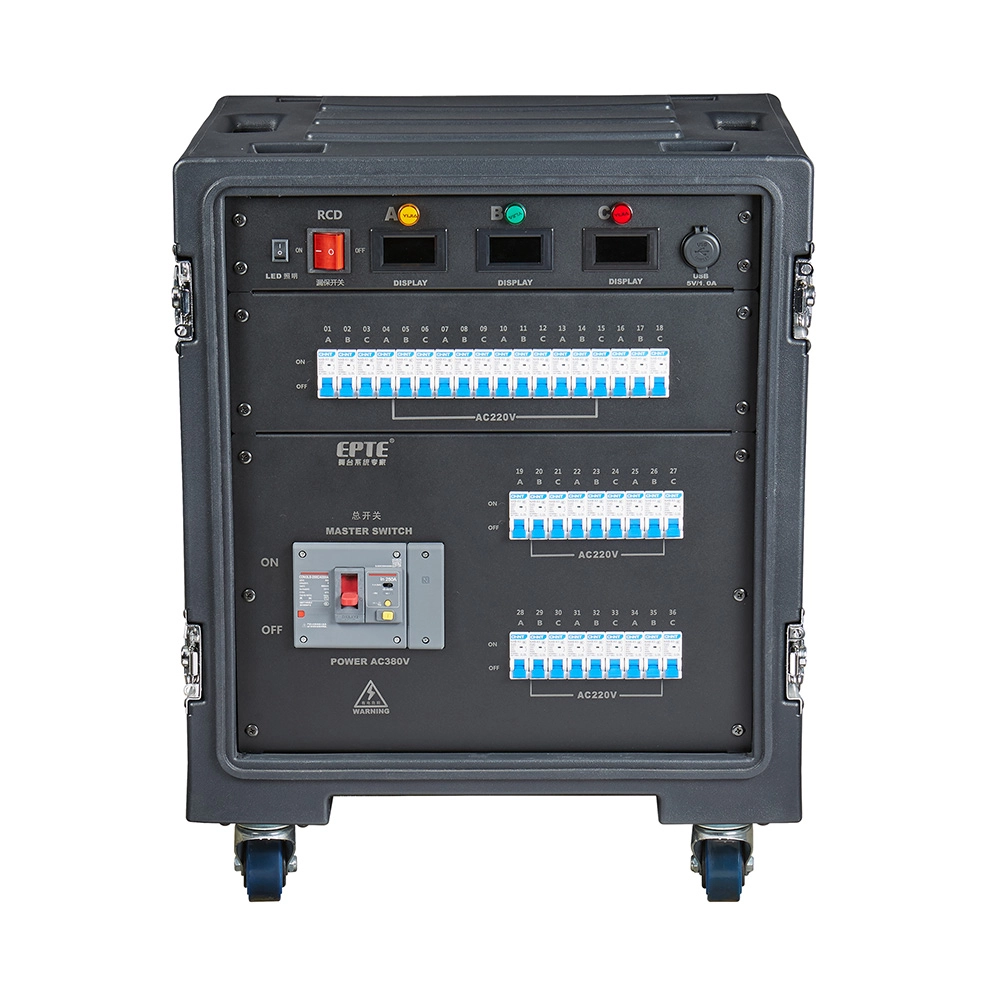
Top 10 Waterproof power distribution products for stages
Top lightweight power distributor box designs for road crews
Top reliable power distributor box brands for touring
Top power distributor box features for live events
About
Does your company have a minimum order quantity requirement?
Cable Testing Tool--19-core detection tool
Is the 19-core detection tool accurate?
EPTE's 19-core detection tool is not only accurate but also fast. Automatic diagnosis can be performed when the cable is connected, and it can quickly identify problems such as short circuits and open circuits of the cable, and intuitively display the fault location through the display screen.
Non waterproof power distribution
How to choose the appropriate power box specifications?
We can tailor a power distribution solution for you according to your specific needs to ensure the best performance and effect.
Cable Testing Tool--HL-S16T 16Pin detection tool
Does the 16-core detection tool require training before use?
The 16-core detection tool is extremely simple and convenient to operate, and usually does not require special training. Even novices can quickly get started by reading the instructions.
18G2.5 Socapex 19P Extension Cable
How is the quality of EPTE wires and cables guaranteed?
EPTE wires and cables strictly follow the national standards of various countries and are manufactured with selected high-quality raw materials to ensure that the products have excellent stability and long service life.
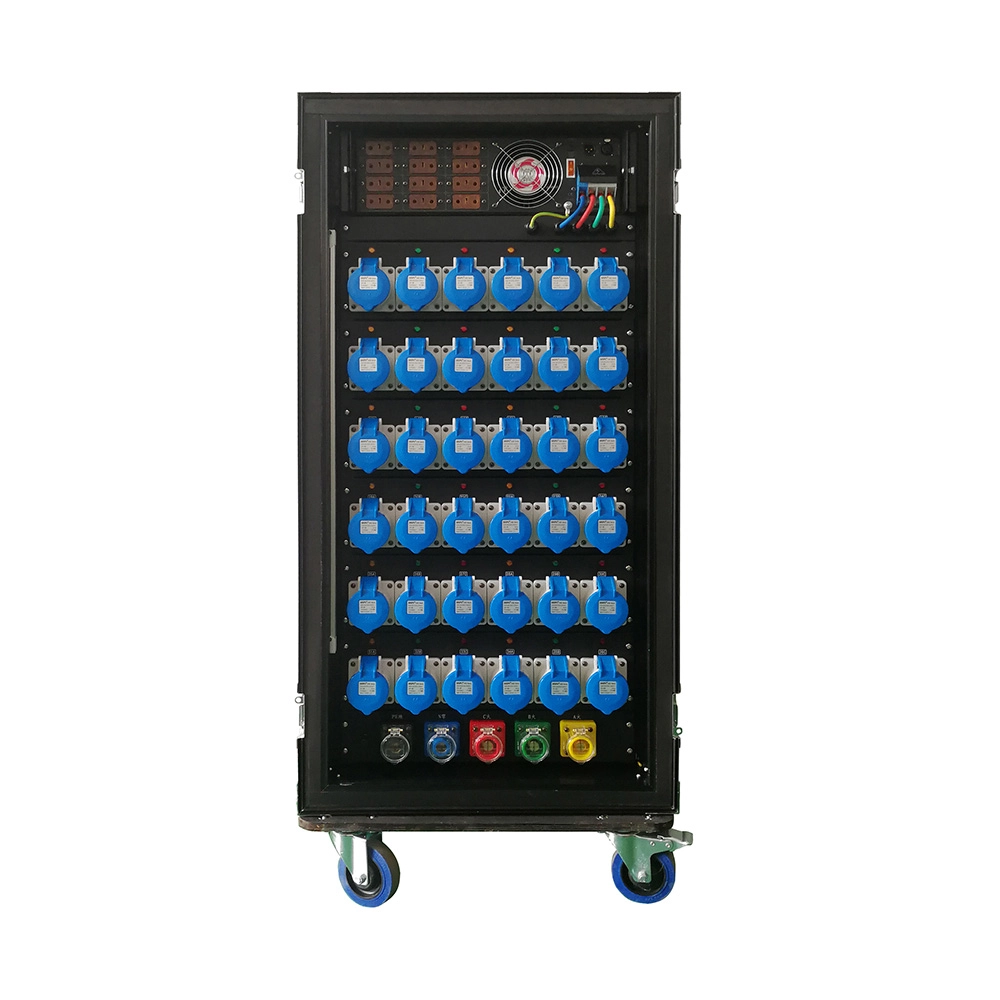
HL-DZ-Z36G12-AR Combination power distribution
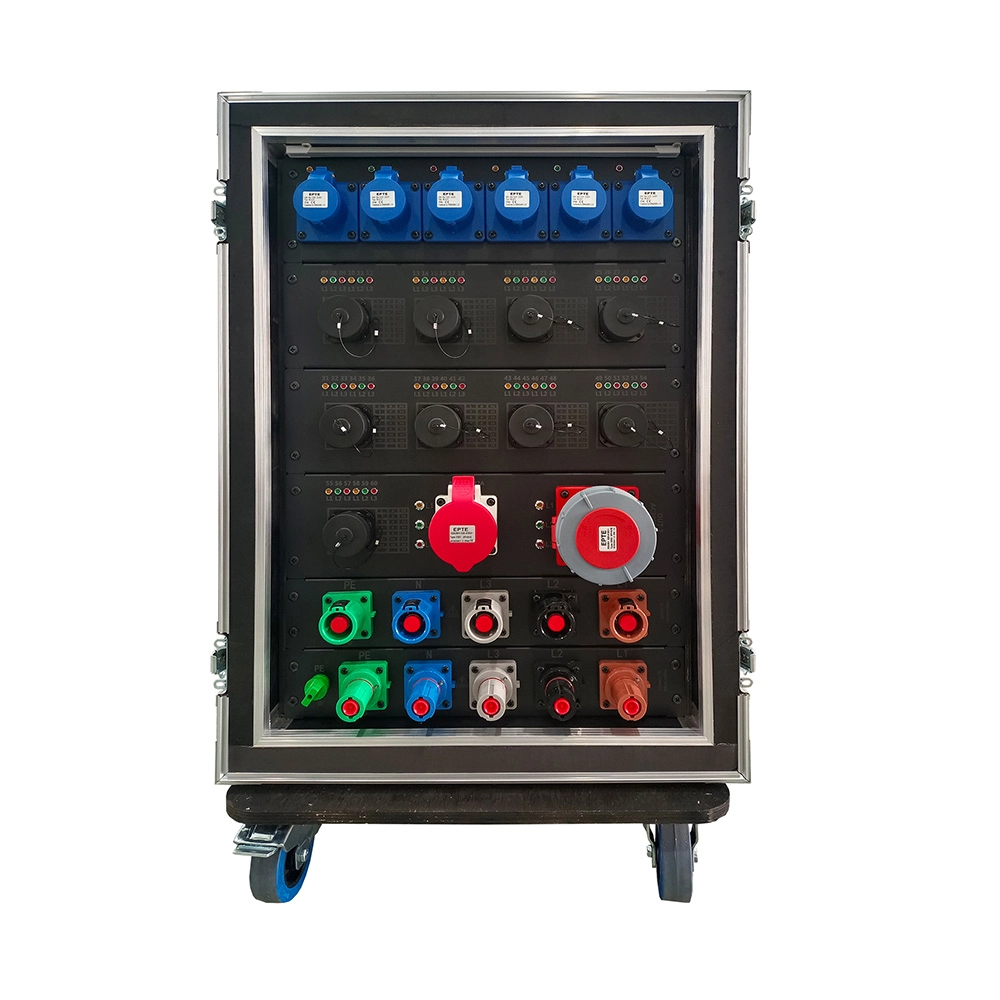
HL-DZ-60CH-C Non waterproof power distribution
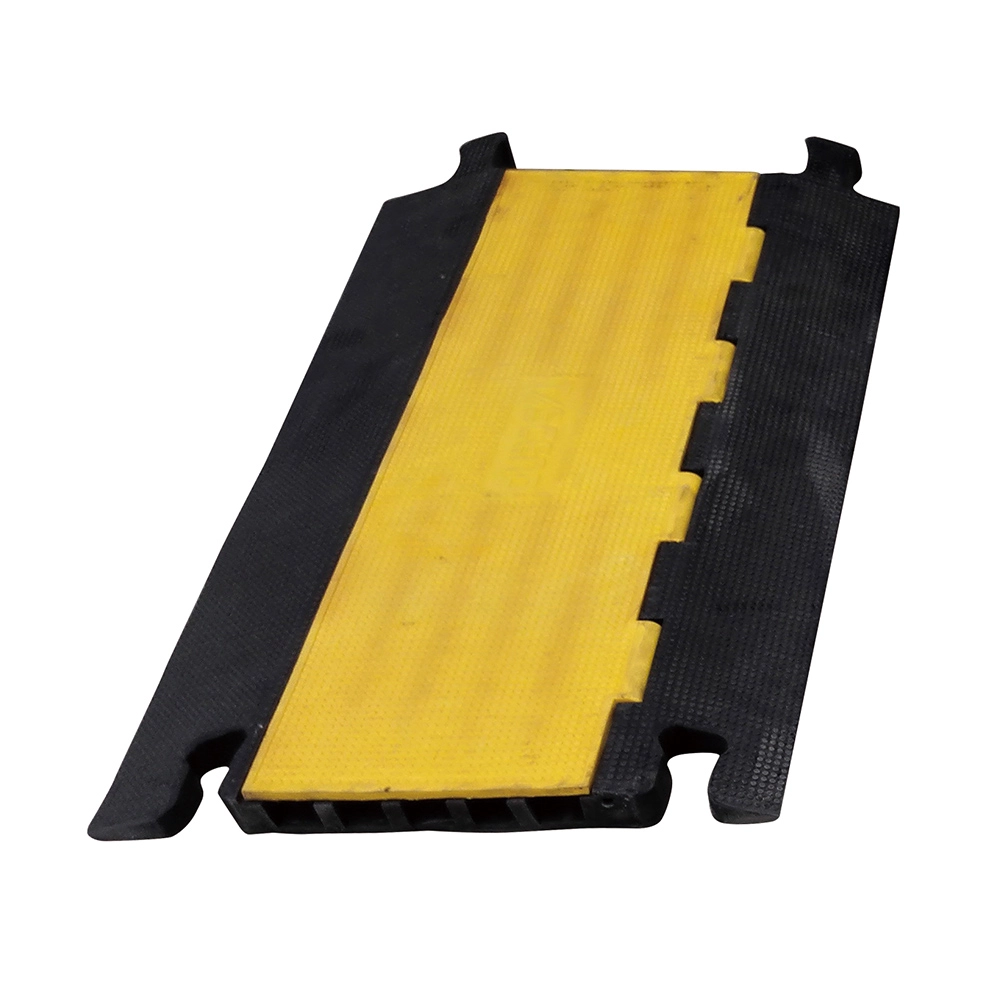
5 channels Heavy duty cable protector
EPTE Power’s 5-Channel Heavy-Duty Cable Protector ensures maximum safety and durability for managing multiple cables. Designed for heavy-duty use, it prevents cable damage in high-traffic areas. Ideal for industrial and commercial settings, it safeguards cables while enhancing workplace safety.
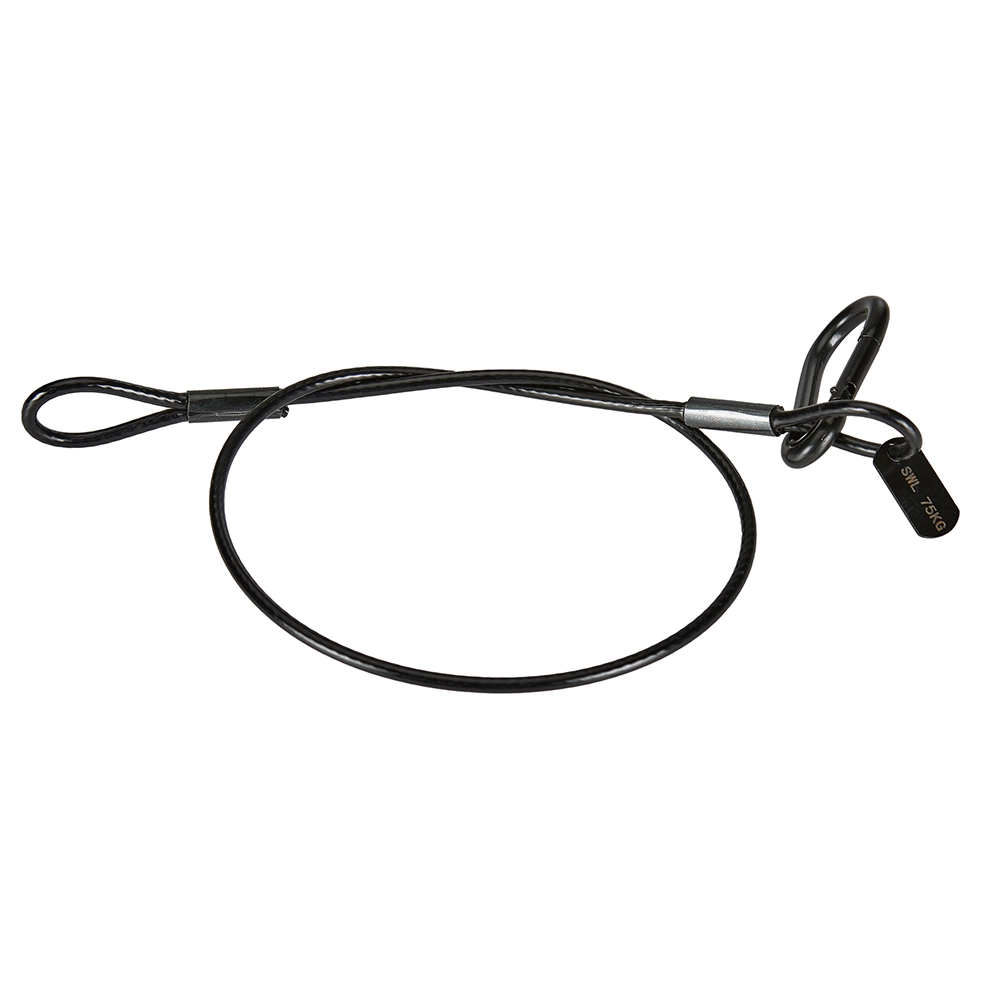
HL-BXS05B80-PVC Safety rope
EPTE Power’s HL-BXS05B80-PVC Safety Rope offers superior strength and durability for reliable fall protection. Made with high-quality PVC, this safety rope ensures maximum safety in hazardous work environments. Ideal for industrial and construction applications. Trust EPTE Power for safety ropes that perform.

Copyright © 2026 EPTE. All Rights Reserved.

 Scan QR Code
 Scan QR Code
EPTE
EPTE
EPTE